Here Today, Gone Tomorrow: The Messy Business Behind Disappearing Streaming Content
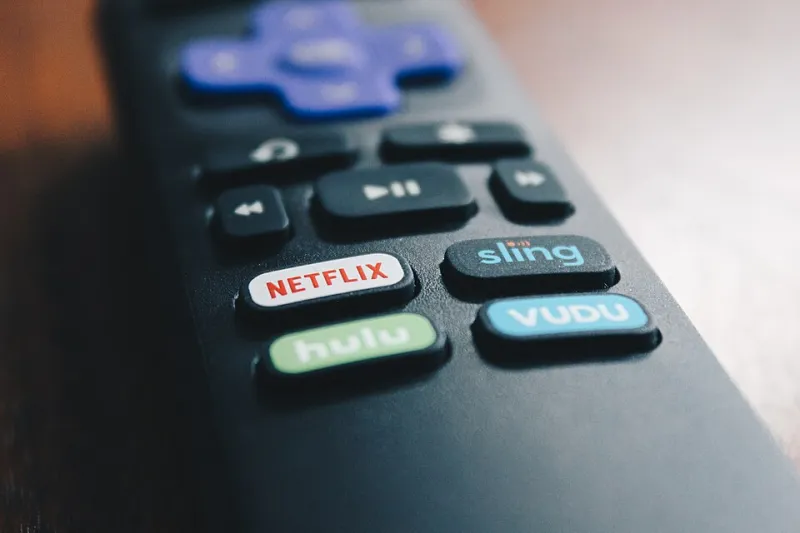
Photo: Flickr Stock Catalog, CC BY 2.0, via Wikimedia Commons
You've been there. You're two seasons deep into something genuinely good, you tell a friend about it, and then you go to pull it up on a Tuesday night only to find it's vanished. No fanfare, no warning notification, just a content-shaped hole where your show used to live. It's not a glitch. It's not an accident. And it's happening more often than ever.
Welcome to the rotating door of streaming content — a feature, not a bug, of how modern entertainment is packaged, sold, and quietly yanked away.
The Licensing Game Nobody Explains to You
Here's the thing most streaming platforms would rather you not think too hard about: a huge chunk of what you're watching doesn't actually belong to them. Licensing agreements — the legal contracts that let a platform carry content it didn't produce — are the invisible scaffolding behind your entire streaming experience.
Those deals expire. They get renegotiated. Sometimes a studio decides it wants its content back to anchor its own platform. Sometimes a competitor outbids the current holder. Sometimes the math just doesn't work out and nobody renews. From a pure business standpoint, it's completely logical. From a viewer's perspective, it feels like someone keeps rearranging your house while you're sleeping.
The problem has gotten dramatically worse since the streaming wars kicked into high gear. When there were two or three major players, content moved around less. Now, with a dozen platforms all competing for the same pool of desirable titles, licensing has become a full-contact sport. Every major studio either has its own streaming service or is actively considering one — which means they have every incentive to pull their catalog off someone else's platform and use it as bait for their own subscribers.
Corporate Consolidation Made Everything Worse
The merger frenzy of the last several years didn't just create awkward corporate hyphenates — it completely scrambled content ownership in ways that are still shaking out.
When Discovery merged with WarnerMedia to form Warner Bros. Discovery, for example, the fallout was swift and strange. Shows were pulled from HBO Max (now just Max) not because anyone stopped watching them, but because keeping them on the platform created tax liabilities. Completed projects got shelved. Existing series vanished from catalogs entirely. The Batgirl situation became a kind of cultural shorthand for just how disposable content had become in the post-merger calculus.
The same dynamic played out differently at other companies. Disney's acquisition of Fox gave them a library so massive that even they couldn't figure out where to put everything. Some of it landed on Hulu, some on Disney+, some got quietly retired. The audience — the actual human beings who watched and cared about these shows — was basically an afterthought in these decisions.
Your Watchlist Is a Ticking Clock
If you're the kind of person who maintains a carefully curated watchlist (and honestly, who isn't at this point), here's a slightly uncomfortable truth: every single title on it has an expiration date. You just don't know what it is.
Some platforms do send removal notices, usually buried in an email you've already trained yourself to ignore. Others just... delete. The JustWatch app and similar aggregators have quietly become essential tools not because they help you find content, but because they help you track it before it disappears — which says something pretty grim about the current state of streaming.
Devoted fanbases feel this the hardest. When a cult favorite gets pulled, it's not just an inconvenience — it's the severing of a shared cultural experience. The community around a show is partially built on the assumption that new viewers can always find it, that it exists somewhere accessible. When that access disappears, so does a piece of the fandom's ability to grow.
Where Does It Actually Go?
So where does content end up when it leaves a major platform? A few places, depending on the circumstances.
Some titles migrate to smaller, niche streaming services — Tubi, Pluto TV, Peacock's free tier — where they get served up alongside ads to audiences willing to trade dollars for time. Others end up on platforms you've genuinely never heard of, licensed to international services or regional players. Some get quietly licensed back to cable, which is a weird kind of full-circle moment for cord-cutters who fled cable to begin with.
And some content just... disappears from legal streaming entirely. Physical media — Blu-rays, DVDs — becomes the only reliable way to access it. Vinyl had its revival. Don't be shocked if physical video makes a quiet comeback among people who are tired of chasing shows across a dozen different apps.
The Aggregator Advantage
Here at 34DYNG, we're pretty upfront about what we are: an aggregation-first operation. Everything, pulled together, right now. And honestly? That framing is more relevant to the streaming content problem than it might seem.
The fragmentation of content across platforms is, at its core, an aggregation failure. The industry built a distribution model that prioritizes platform loyalty over viewer experience, and the result is a chaotic, unstable ecosystem where nothing feels permanent. The shows you love exist in a state of constant uncertainty, and the only rational response is to watch them sooner rather than later — because later might be too late.
Until the industry figures out a better answer — and there's no real sign that it will anytime soon — the best advice is frustratingly simple: if you want to watch something, watch it now. Your watchlist is not a promise. It's a suggestion.
And maybe, just maybe, start backing up those Blu-ray recommendations.