Reboot Culture Is Eating Itself: Hollywood's Nostalgia Machine and the Stories We're Not Getting
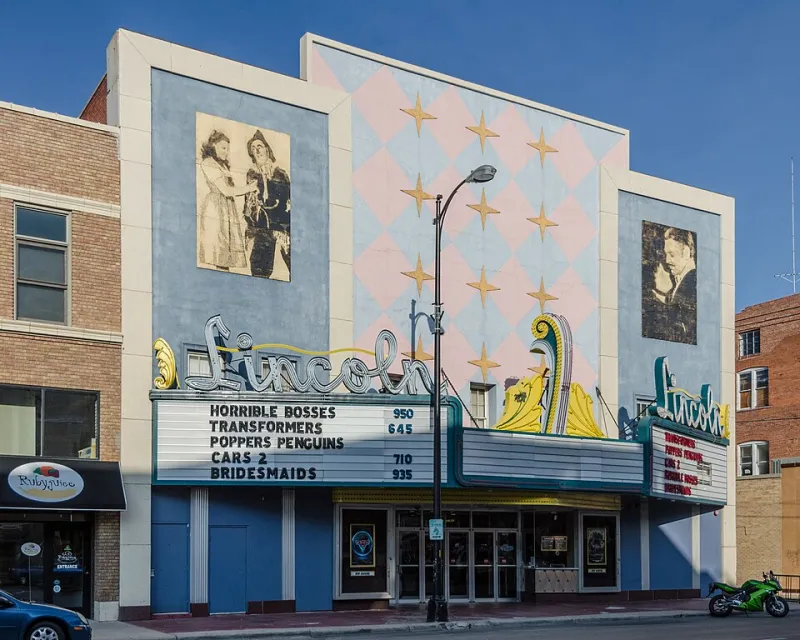
Photo: DXR, CC BY-SA 4.0, via Wikimedia Commons
Somewhere in a Los Angeles conference room right now, someone is pitching a reboot. Maybe it's a beloved '90s sitcom getting a streaming revival. Maybe it's an animated kids' property from the early 2000s being reimagined for a new generation — which really means: for the parents of that new generation, who are the ones actually making the viewing decisions and holding the credit cards. Maybe it's the fourth attempt at a cinematic universe built around characters who had their definitive story told decades ago.
Whatever it is, the pitch is probably going well. Because in 2024, the safest bet in Hollywood is a name someone already recognizes.
The Math That Killed Original Ideas
Let's be honest about what's driving this. It's not that studio executives have forgotten how to appreciate creativity. It's that the financial structure of modern entertainment has made original IP genuinely terrifying to greenlight at scale.
A major studio tentpole costs $150 million to $300 million to produce, and roughly the same again to market globally. At those numbers, you need a near-guarantee of opening weekend performance, and opening weekend performance correlates heavily with pre-existing awareness. An unknown title with an original premise is a coin flip. Transformers: Rise of the Beasts — whatever you think of it — is a known quantity before a single trailer drops.
Streaming made this calculus even more extreme in some ways. Platforms like Netflix and Amazon Prime chased subscriber growth by licensing or producing enormous volumes of content, but the projects that actually moved the needle on subscriptions and retention were almost always tied to recognizable brands. Stranger Things is original, technically — but it's built entirely from the nostalgic vocabulary of '80s genre entertainment. Even the outliers prove the rule.
Your Feelings Are a Business Model
Nostalgia marketing is one of the most effective tools in the entertainment industry's arsenal, and it operates on a pretty specific psychological mechanism. When you encounter something that reminds you of a formative experience — a theme song, a character design, a title font — it triggers a kind of emotional shorthand. You're not just reacting to the thing in front of you; you're reacting to the version of yourself that loved the original.
Studios know this. It's why Top Gun: Maverick didn't just perform well — it obliterated expectations, becoming one of the highest-grossing films of 2022 on the back of an audience that grew up with the original and brought their kids along for the ride. It's why every major theme park expansion involves IP that's at least 15 years old. Familiarity lowers resistance.
The generational targeting here is worth paying attention to. Millennials are currently in their peak earning years, which makes their childhood properties — everything from Teenage Mutant Ninja Turtles to Power Rangers to basically the entire Disney Renaissance catalog — extremely valuable real estate. Gen X gets their Ghostbusters and their Indiana Jones sequels. Even Gen Z, young as they are, is already seeing nostalgia mining of early-2000s properties they barely remember.
Every generation's childhood eventually becomes a monetizable asset. The pipeline never stops.
The Creative Desert Argument
Here's where the cultural criticism gets sharper. The concern isn't just that reboots and remakes exist — it's that the sheer volume of them is crowding out the space where new cultural touchstones get created.
Think about it this way: the properties being endlessly rebooted today were original ideas once. Star Wars was a completely original film when it came out in 1977. The Lion King wasn't a remake of anything. Ghostbusters was a spec script that nobody was sure would work. Those films became generational touchstones because they were new, because they created something audiences hadn't seen before.
If the industry had been operating in 2024 mode back then, would those films have gotten made? Or would the money have gone to another adaptation of a property that already had proven audience awareness?
The concern isn't abstract. Several prominent screenwriters and directors — from Rian Johnson to Guillermo del Toro — have spoken publicly about the difficulty of getting original, mid-budget films greenlit in the current environment. The space for the kind of movie that used to define American cinema (the adult drama, the original sci-fi concept, the weird auteur project) has genuinely shrunk.
Not All Nostalgia Is Created Equal
To be fair, the nostalgia economy isn't uniformly lazy. Everything Everywhere All at Once — one of the most original films in years — won Best Picture. Some revivals genuinely add something: The Bear isn't a reboot of anything, and Succession was entirely new. The streamers, for all their IP-chasing, have also funded some genuinely adventurous content.
And some reboots are good. Top Gun: Maverick was, by most accounts, a better film than it had any right to be. The Scream franchise revival found a way to be self-aware about exactly this cultural moment. Nostalgia, handled with craft and intention, can produce real art.
The problem is proportion. When the ratio of familiar to new tips so heavily in one direction, the whole ecosystem starts to feel less like a creative industry and more like an IP licensing operation with some filmmaking on the side.
What Happens When the Well Runs Dry?
There's a sustainability question lurking under all of this. The nostalgia machine runs on a finite supply of beloved properties, and those properties have a shelf life. At some point, you run out of '80s cartoons to reboot. At some point, the audience that grew up with a franchise ages out of the target demographic, and the new generation doesn't have the same emotional connection to the original.
Indiana Jones and the Dial of Destiny made less money than anyone at Disney hoped. Several high-profile franchise revivals in recent years have underperformed significantly. The market is starting to signal, in the language studios actually understand, that not every piece of familiar IP is automatically valuable.
The industry will adapt — it always does. But the adaptation might involve rediscovering something that used to be obvious: that original stories, told well, are how you create the nostalgic properties of the future. You can't mine what you never planted.
Somewhere, the next Star Wars is waiting to be written. Whether anyone will greenlight it is a different question entirely.