Your TV Is Talking to Your Phone: Inside the Billion-Dollar Bidding War for Half Your Attention
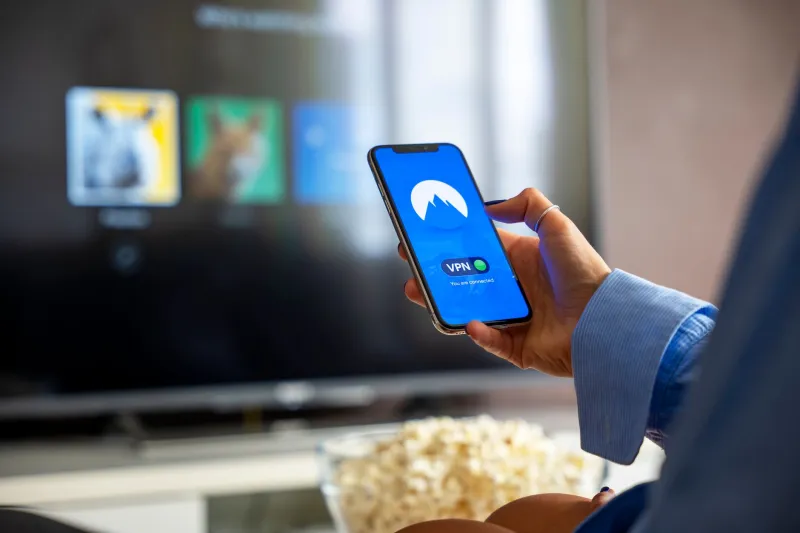
Here's a fun experiment for the next big live event you watch — the Super Bowl, the Oscars, whatever's got America glued to the couch. Look around the room. Notice how many people are holding their phones. Now notice that you're probably one of them.
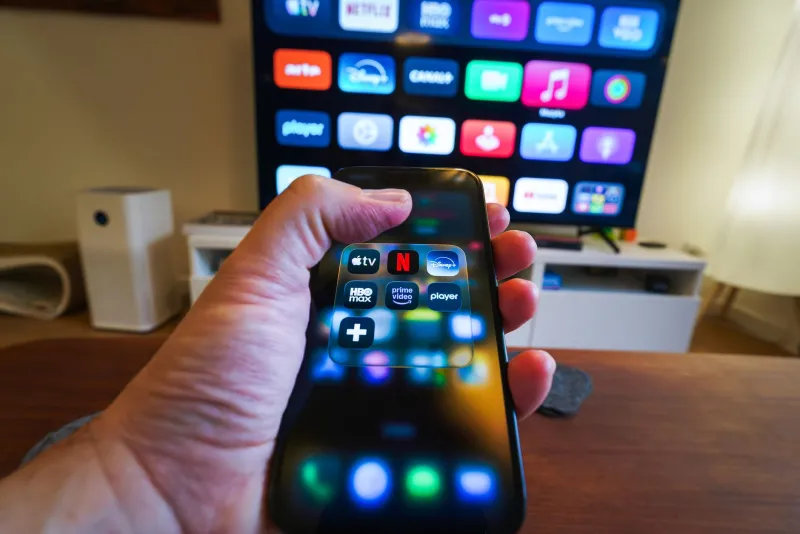
That split attention isn't a bug in modern life. It's the single most valuable behavior in American advertising, and an entire industry has been built around capturing it. Welcome to the second screen economy — where the ads on your TV are only half the pitch, and the other half is happening six inches from your face.
Two Screens, One Auction
The numbers are a little staggering. During major live broadcasts, social media engagement explodes — X (formerly Twitter) can see millions of posts per minute during the Super Bowl, and Reddit's live game threads turn into de facto watch parties for millions of people who want to react in real time. Advertisers know this, and they're not just buying TV spots anymore. They're bidding on the conversation happening around the TV.
The mechanics work like this: brands run synchronized campaigns where a 30-second spot airs on broadcast, and simultaneously, promoted posts, sponsored hashtags, and real-time social ads flood the second screen. The goal isn't to make you look up from your phone. It's to make sure that while you're already looking down, you see them too.
Some brands have gotten remarkably good at this. The playbook includes buying up trending hashtags seconds before their TV spot airs, deploying social teams to meme-ify their own commercials in real time, and running location-based mobile ads targeting people within range of a stadium or a sports bar.
How They Know You're Splitting Your Attention
Here's the part that should raise an eyebrow: advertisers have gotten shockingly precise at detecting second screen behavior.
It's not magic. If you've ever used a streaming app on your TV while logged into the same services on your phone, that's one thread. If your smart TV's automatic content recognition (ACR) software identifies what you're watching — and most modern TVs do this by default — and that data gets matched against the ad IDs on your phone, that's another. Data brokers stitch these signals together into something called cross-device graphing, essentially a map of which devices belong to the same human.
The result: an advertiser can know, with reasonable confidence, that the person watching their Super Bowl ad at 8:42 PM also scrolled through three apps during that exact window. They can then serve that person a follow-up mobile ad, measure whether they later visited a store or made a purchase, and close the loop.
It's attribution nirvana for the ad industry. It's also a level of behavioral tracking that most Americans never knowingly signed up for. The opt-outs exist — buried in your TV's settings menu, in your phone's ad personalization controls, in privacy policies longer than a screenplay — but nobody clicks through those. And the industry is fine with that.
The Ad Designed to Be Ignored
Which brings us to the strangest creative shift in modern advertising: the rise of the TV commercial that's meant to be half-watched.
Traditional ad logic says every second on screen should demand attention. But second screen strategists have flipped that. Some spots are now engineered to work even when you're looking at your phone — bold brand colors you'll catch in your peripheral vision, audio hooks designed to register subconsciously, or visuals deliberately weird enough to pull your eyes back to the TV. Others are built to drive you to your phone: QR codes, hashtags, prompts to search something the moment the spot ends.
There's a growing school of thought in ad land that the most successful Super Bowl commercials aren't the ones you watch — they're the ones you post about. The commercial is the kindling; the second screen is the fire.
What It Means for You
So is this the death of watching TV like a normal person? Not quite. Live sports and awards shows remain the last bastion of true appointment viewing precisely because they're second-screen friendly — there's something to talk about, in real time, with millions of strangers. Advertisers aren't ruining that; they're colonizing it.
But a few things are worth doing if the tracking gives you the ick. Check whether your smart TV has ACR enabled and turn it off if you don't want your viewing habits sold. Reset your mobile advertising ID occasionally. And know that no setting makes you invisible — the second screen economy runs on inference as much as data.
The bigger picture is this: the idea of a single screen commanding your full attention is effectively over. Advertisers stopped mourning that a long time ago. They simply followed your eyeballs — down and to the right, to the glowing rectangle in your hand — and built a bidding war around the half of you that lives there.
The next time a Super Bowl ad makes you laugh and you reach for your phone to post about it, remember: that's not a spontaneous reaction. That's the campaign working exactly as designed, on both screens at once.