Who Decides What's Worth Watching? It's Not Critics Anymore
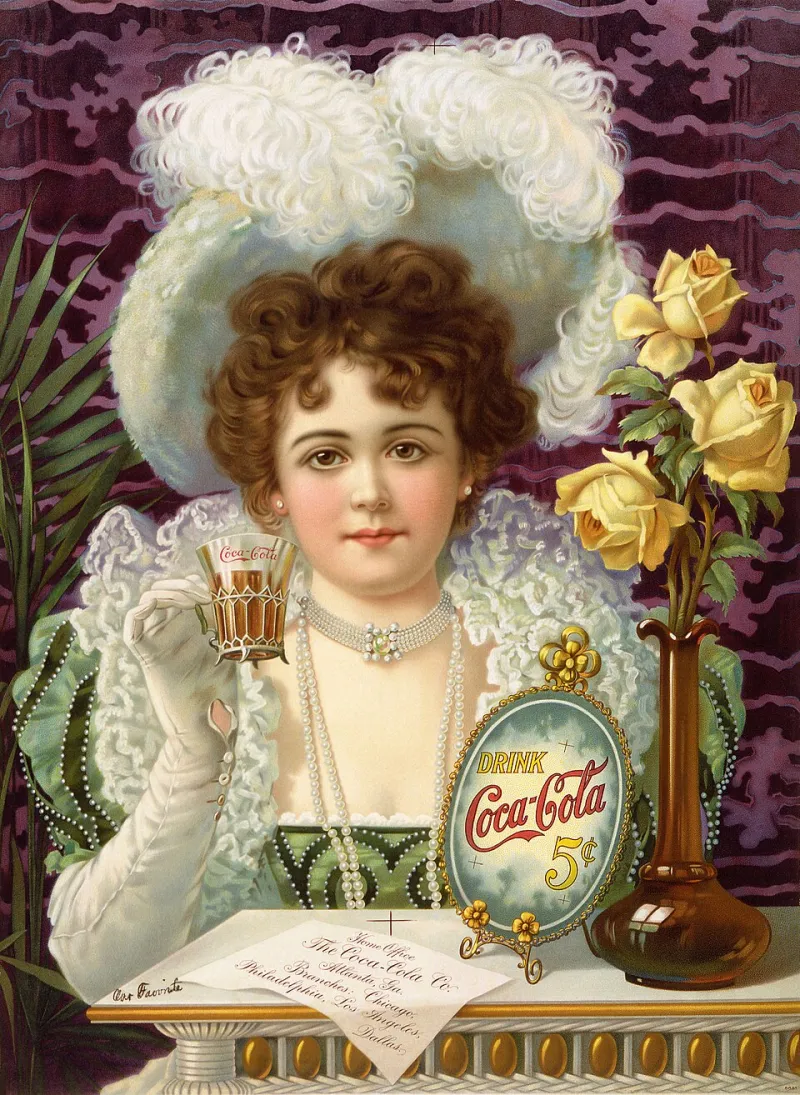
Photo: Artist not credited. derivative work (restoration): Victorrocha (talk) Cocacola-5cents-1900.jpg: ', Public domain, via Wikimedia Commons
There's a scene that plays out constantly on social media, and you've definitely seen it. Someone posts a 45-second video reacting to a trailer, a show's finale, or a random deep-cut moment from a film that came out three years ago. The video blows up. Suddenly that piece of content is everywhere — in your For You page, your Instagram Reels, your YouTube Shorts. Friends are texting you about it. The algorithm has spoken.
This is how entertainment discovery works now. Not through a thoughtful 800-word review in a magazine. Not through a Rotten Tomatoes score. Through whoever the algorithm decided to amplify that week.
The gatekeepers didn't disappear. They just got younger, less credentialed, and a whole lot harder to hold accountable.
The Old Guard and Why It Lost
Traditional entertainment journalism had real problems before TikTok ever existed. Critics were overwhelmingly concentrated in coastal cities, skewed toward certain demographics, and often disconnected from the mainstream tastes of the actual American audience. The gatekeeping was real — and it wasn't always serving viewers well.
So when social media started giving ordinary people a platform to share genuine reactions, there was something genuinely democratic about it. A teenager in Tulsa could post her honest take on a horror movie and reach more people than a veteran film critic at a legacy publication. That felt like progress.
And in some ways it was. Marginalized voices got amplified. Genre films that highbrow critics dismissed found passionate audiences. The monoculture cracked open.
But "more democratic" and "more accountable" aren't the same thing. And as influencer culture matured, the gatekeeping didn't disappear — it just moved into a system with almost no transparency.
The Sponsored Post Problem
Here's the part that doesn't get talked about enough: a significant chunk of what looks like organic enthusiasm from entertainment influencers is paid promotion. Studios, streaming platforms, and PR firms have entire influencer marketing budgets dedicated to seeding content with creators who have the right audience demographics.
Some creators are transparent about it. The #ad disclosure is there, the partnership is stated upfront. But the line between a paid post and a "genuine" recommendation has gotten genuinely blurry. Creators who receive early screeners, fly-out press junket invites, or exclusive merchandise aren't technically being paid to post — but they're also not exactly operating from an unbiased position.
The FTC has rules about this. Enforcement is another matter entirely.
For Gen Z and millennial audiences who've grown up treating influencers as trusted peers rather than commercial entities, the distinction matters. You might be taking a movie recommendation from someone who got flown to London for a press event and stayed in a hotel paid for by the studio. That's not a friend's opinion. That's a marketing channel with a face.
How the Algorithm Picks Its Favorites
Beyond the paid promotion layer, there's the algorithmic favoritism problem. TikTok, Instagram, and YouTube all have recommendation systems that disproportionately reward certain types of content — high energy, emotionally reactive, visually stimulating, and above all, watch-time-maximizing.
This means the entertainment takes that go viral aren't necessarily the most insightful or accurate. They're the ones engineered (consciously or not) to trigger the engagement signals the algorithm rewards. Outrage, hyperbole, and dramatic reactions outperform measured analysis every single time.
The practical result: entertainment discourse online skews toward extremes. Everything is either the greatest thing ever made or a complete disaster. Nuanced takes don't clip well. A 60-second video explaining why a film is "pretty good but uneven" doesn't compete with someone screaming that it's a masterpiece.
This distorts how content actually gets evaluated — and by extension, what gets greenlit next, because studios are absolutely watching these metrics.
The New Power Brokers
Make no mistake: the influencers who've built large, loyal audiences in the entertainment space have real power. A positive video from a creator with two million engaged followers can genuinely move ticket sales for a mid-budget film. A negative pile-on can accelerate a box office collapse.
This is influence that used to live with critics at major publications, and before that, with TV bookers who decided which authors and directors got a spot on the couch. The power has shifted, but it hasn't evaporated.
What's changed is the accountability structure. A film critic at a newspaper had editors, institutional standards, and a professional reputation staked to their track record over years. An influencer's accountability is primarily to their audience engagement metrics — and audiences, it turns out, often reward confidence and personality over accuracy.
There's no correction mechanism when an influencer's hot take about a film turns out to be completely wrong. There's no editor pushing back. There's just the next video.
What This Means for the Stuff You Actually Watch
For regular entertainment consumers, the practical takeaway is worth sitting with. Your discovery pipeline — the thing that decides what shows up in your awareness as "worth watching" — is being shaped by a mix of algorithmic amplification, paid partnerships, creator personality cults, and genuine grassroots enthusiasm, all blended together with very little labeling.
That's not entirely different from how traditional media worked. Advertisers always had influence. Critics always had biases. But the scale and speed of the current system, and the degree to which it's optimized for engagement over accuracy, creates a noisier environment for figuring out what's actually good.
The aggregation of entertainment opinion — the pulling together of all these voices into something coherent — is technically happening. It's just happening through an algorithm that's optimizing for watch time, not truth.
Which means the most important skill for anyone navigating entertainment in 2025 isn't knowing which critics to trust. It's knowing which influencers are actually talking to you — and which ones are talking for someone else.