Canceled in the Court of Public Opinion: When Creator Chaos Decides What We Watch
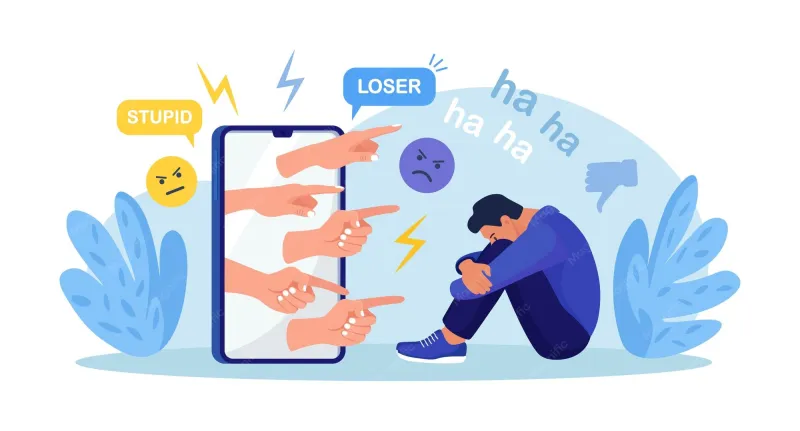
Photo: social media controversy phone screen upset viewer, via img.freepik.com
Let's say your favorite podcast host gets caught in a messy public feud. Or the showrunner behind a series you've followed for three seasons turns out to have a history that's, let's say, complicated. Or a creator you've genuinely admired for years goes on a social media spiral that makes you question everything you thought you knew about them.
Do you keep watching? Do you stop? Do you feel weird about the fact that you're even asking the question?
This is the new texture of being an entertainment consumer in America, and it's getting heavier by the month.
The Parasocial Trap
Something shifted when content creation became a personality business. It wasn't enough to just make a good show or a funny video — creators needed to be knowable. Relatable. Present. The rise of behind-the-scenes content, creator vlogs, social media Q&As, and parasocial intimacy-building has fundamentally changed the deal between audiences and the people who entertain them.
We don't just consume the work anymore. We consume the person. And when the person turns out to be messier than their carefully managed public image suggested — which, let's be honest, is almost always eventually — we feel something closer to personal betrayal than simple disappointment.
That's the parasocial trap. You never actually knew them. But your nervous system didn't get the memo.
One Moment, One Million Opinions
Social media has turned creator controversy into a real-time spectator sport. A single clip, a screenshot, a resurfaced interview from six years ago — any of these can trigger a cascade that completely reframes how an audience relates to a piece of work.
The speed is genuinely disorienting. A controversy that might have taken months to percolate through traditional media now fully develops, peaks, and generates counter-takes within 48 hours. By the time you've formed your own opinion, there are already thinkpieces about whether the backlash was overblown, counter-thinkpieces about whether those thinkpieces were too forgiving, and a general sense of collective exhaustion that settles over the whole thing like a fog.
And somewhere in the middle of all that noise, there's an actual show — or album, or book, or film — that people have to decide whether they still want to engage with.
Can You Actually Separate the Art from the Artist?
This is the question everyone acts like they have a clear answer to, and almost nobody actually does.
The "separate the art" position has a certain intellectual tidiness to it. Great work is great work. The Cosby Show is a piece of television history regardless of what we now know about Bill Cosby. Woody Allen made films that genuinely moved people. The work exists independently of the person who created it.
But that framing ignores something real: watching a piece of content is not a purely intellectual exercise. It's emotional. It involves enjoyment, connection, and a kind of ongoing relationship with the material. When a creator's real-world behavior is disturbing enough, it can permanently alter the emotional experience of engaging with their work. You're not watching the same show you were watching before you knew what you now know. The context has changed, and context is part of the experience.
Most people end up somewhere in the messy middle — making case-by-case calls, feeling vaguely guilty about whichever choice they make, and not entirely sure what their decision says about them as a person.
The Fatigue Is Real and Growing
Here's what's starting to happen as this cycle repeats: people are burning out on the drama itself.
There's a growing contingent of viewers who've started deliberately avoiding parasocial investment in creators. They'll watch the show, but they're not following the showrunner on Twitter. They'll enjoy the music, but they're not subscribing to the artist's newsletter or watching their YouTube channel. They're consciously building a firewall between the content and the creator's personality — not out of naivety, but as a kind of self-protective measure.
It's a rational adaptation to an irrational media environment. When every creator relationship comes with the latent risk of a reputation-destroying revelation, the logical move is to keep your emotional investment in the work itself rather than the person behind it.
The irony, of course, is that this is exactly the opposite of what the creator economy has been built to encourage. The whole model depends on parasocial investment. Patreon, Substack, YouTube memberships — all of it runs on the feeling that you have a genuine relationship with the creator. Pull that thread and the whole monetization structure gets complicated.
What This Actually Does to Viewing Habits
The downstream effect on what Americans actually watch is subtle but real. Shows attached to controversial creators see measurable drops in engagement following major controversies — not necessarily because everyone stops watching, but because casual viewers disengage and the show loses the word-of-mouth momentum it depends on to grow.
More interestingly, creator drama has started functioning almost like negative marketing. A controversy that keeps a creator's name in the news can actually drive short-term curiosity viewing — people who want to understand what all the fuss is about. But it almost never converts those viewers into loyal fans, and it poisons the well for the work's long-term reputation.
There's also a chilling effect on discovery. When audiences become wary of investing in new creators because of the risk of eventual disappointment, they retreat toward established, "safe" content — which, conveniently, tends to be older, corporate-produced, and less risky in every direction. The indie creator with a genuine voice gets penalized for operating in a space where personal exposure is unavoidable.
The New Entertainment Math
At 34DYNG, we aggregate everything — the content, the context, the chaos. And what the chaos is telling us right now is that the entertainment industry is in the middle of a fundamental renegotiation of the audience-creator contract.
The old deal was simple: make something good, people watch it, everyone's happy. The new deal is messier: make something good, maintain a public persona that people can live with, hope that nothing from your past resurfaces at the wrong moment, and accept that your audience now has opinions about you as a human being that will directly affect how they relate to your work.
That's a lot to ask. And audiences, increasingly, are starting to wonder if they even want to be part of the transaction anymore.
Maybe the most honest thing we can say is this: the parasocial era was always going to end badly for somebody. We're just now finding out who.